
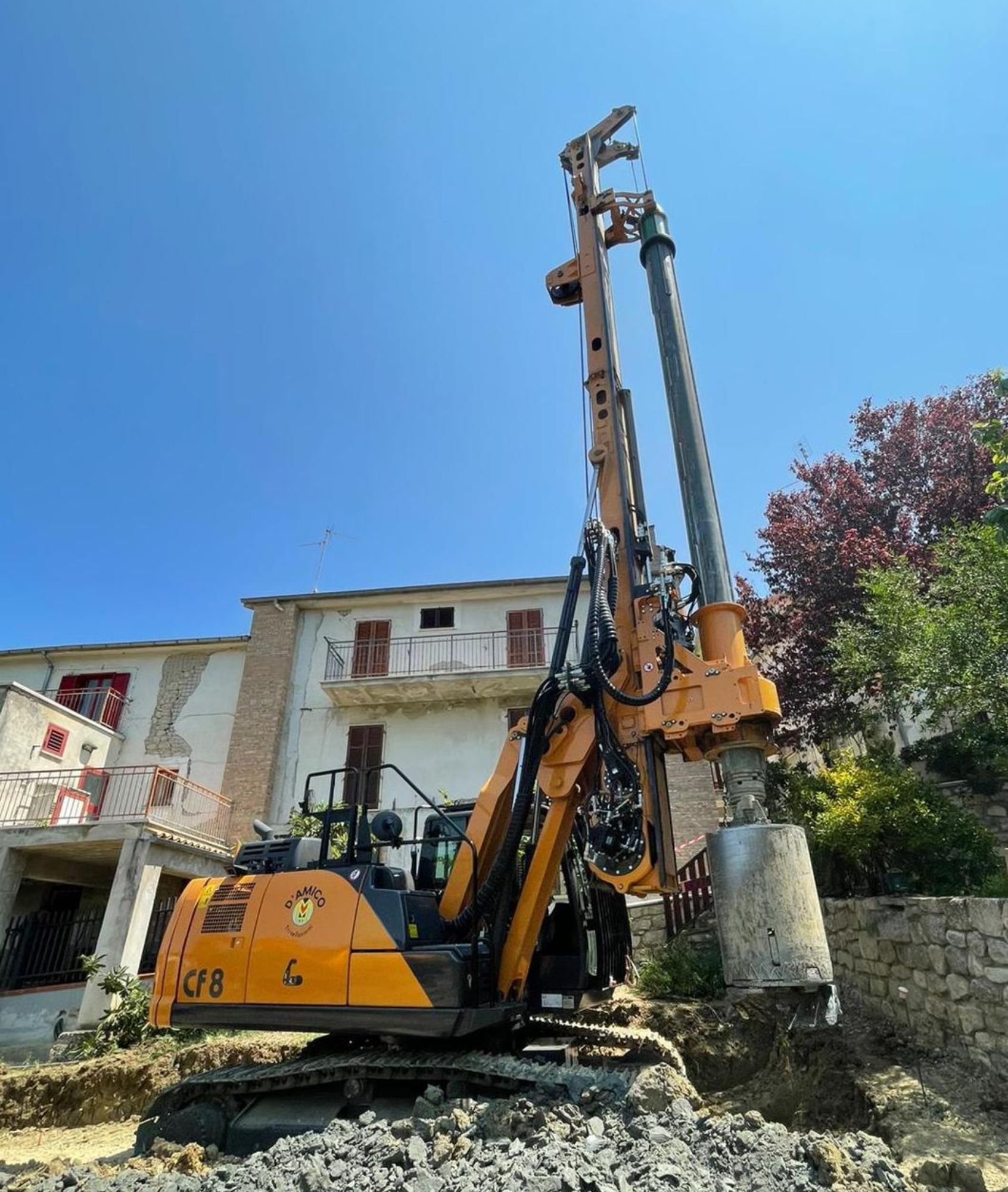
Quick Answer
How deep can a piling rig drill? A piling rig may drill anything from relatively shallow foundation piles to more than 100 metres on large rotary or Kelly drilling rigs. The real answer depends on the rig model, drilling method, Kelly bar or auger setup, pile diameter, soil and rock conditions, casing requirements, groundwater, and site access.
Introduction
Piling rig drilling depth is not a fixed number. A compact micropile rig, CFA piling rig, medium rotary rig, and large Kelly drilling rig can all create deep foundations, but they are designed for different pile sizes, access conditions, and ground profiles.
For background, start with What Is a Piling Drill Rig?. To compare machine families, see Types of Piling Drill Rigs and Choosing the Right Piling Rig for Your Project.
Typical Piling Rig Drilling Depth Ranges
The ranges below are planning references, not guarantees. Manufacturer data should always be checked against the exact machine, mast, Kelly bar, auger, tooling, and job-site conditions. Large manufacturer portfolios show that specialist drilling rigs can reach beyond 100 metres, while smaller rigs are usually chosen for access and precision rather than maximum depth.
| Rig or method | Typical planning range | Where it fits | Depth caution |
|---|---|---|---|
| Micropile or anchor rig | Often 10-50 m | Underpinning, anchors, restricted access, slopes, retrofit work. | Depth depends heavily on tooling, drilling angle, grout method, casing, and access. |
| CFA piling rig | Often 15-35 m | Fast production piling in suitable soils and repeated pile layouts. | Auger length, concrete pumping control, spoil handling, and reinforcement placement are critical. |
| Rotary piling rig | Often 30-80+ m | Bored piles, casing work, buckets, augers, mixed soils, and rock sockets. | Published maximum depth may change with pile diameter, tool type, and borehole support. |
| Large Kelly drilling rig | Often 50-100+ m | Deep bored piles, large diameters, bridges, towers, heavy civil foundations. | The Kelly bar, mast, torque, extraction force, casing, and ground conditions must all align. |
| Specialist deep foundation setup | 100 m and beyond | Major infrastructure and very deep bearing layers. | Requires engineering review, suitable rig configuration, experienced crews, and support equipment. |
What Controls Maximum Drilling Depth?
Maximum depth is a combined result of the machine, method, ground, and site plan. Key factors include:
- Rig size and mast configuration: Larger rigs can carry longer tooling and heavier drilling systems, but need more access and platform capacity.
- Kelly bar, auger, or drill string: The drilling system must physically reach the required depth while transferring enough torque and crowd force.
- Pile diameter: Larger diameters increase spoil volume, tool load, torque demand, and borehole support requirements.
- Ground conditions: Soft soils, dense sands, boulders, weathered rock, hard rock, and groundwater all change drilling speed and practical depth.
- Borehole support: Casing, drilling fluid, or other support may be needed to keep the bore stable before reinforcement and concrete are placed.
- Tooling and wear parts: Buckets, augers, core barrels, teeth, casing shoes, and other tools must match the ground and depth target.
- Site logistics: Spoil handling, concrete delivery, reinforcement cages, crane support, and working area can limit productivity.
Depth by Piling Method
Kelly and rotary bored piling
Kelly and rotary rigs are the usual starting point for deeper bored piles. Large rigs can reach very deep foundation levels when the Kelly bar, mast, rotary drive, pile diameter, and borehole support are correctly matched.
CFA piling
CFA drilling is often chosen for productive work in suitable ground. It is less about extreme depth and more about controlled production, concrete pumping, auger extraction, and pile consistency.
Micropile drilling
Micropile rigs are selected for restricted access, underpinning, slope stabilization, anchors, and retrofit work. Vernep lists anchor and micro piling rigs for these specialist applications.
Driven piles and hydraulic piling rigs
Driven pile systems do not drill in the same way. Their practical depth depends on pile length, splicing, drivability, hammer or vibrator capacity, soil resistance, noise and vibration limits, and engineering acceptance. If the project requires drilled piles, compare dedicated piling drill rigs instead.
How to Confirm the Required Drilling Depth
The correct drilling depth should come from the geotechnical report and foundation design, not from equipment availability. Before buying or renting a rig, confirm:
- Required pile depth, diameter, and tolerance.
- Target founding layer or rock socket requirement.
- Soil profile, groundwater level, obstructions, and collapse risk.
- Whether casing, drilling fluid, core barrels, or special tools are required.
- Working platform capacity, access width, overhead clearance, and mobilization limits.
- Concrete, grout, reinforcement, spoil handling, and inspection requirements.
When a Deeper Rig Is Not Always Better
A deeper drilling rating can look attractive, but it does not automatically make a rig the best choice. Oversized equipment can create unnecessary transport cost, higher working platform demands, larger exclusion zones, and slower setup on tight sites.
For a short project, renting a correctly configured rig may be smarter than buying the deepest available machine. For repeat work, reviewing pre-owned piling drill rigs or current inventory may give better long-term control.
Frequently Asked Questions
How deep can a piling rig drill?
A piling rig can drill from shallow foundation depths to more than 100 metres on large specialist rotary or Kelly drilling systems. Actual depth depends on rig model, mast setup, tooling, pile diameter, ground conditions, and borehole support.
Can a piling rig drill over 100 metres?
Yes. Large rotary and Kelly drilling rigs can exceed 100 metres in suitable configurations, and some manufacturer portfolios list maximum drilling depths over 120 metres. The project setup must still be checked against the exact machine and tooling.
What limits piling rig drilling depth?
Depth is limited by the rig configuration, Kelly bar or auger length, mast capacity, torque, crowd and extraction force, pile diameter, soil or rock conditions, casing requirements, groundwater, and site logistics.
Is CFA drilling as deep as Kelly drilling?
CFA drilling is usually selected for efficient production piles at moderate depths, while Kelly drilling is often preferred for deeper bored piles, larger diameters, rock sockets, or more variable ground.
How do I know what drilling depth my project needs?
Use the geotechnical report and foundation design to confirm the required pile depth, diameter, founding layer, groundwater conditions, and construction method before selecting or renting a piling rig.
References and Further Reading
Need to Match Rig Depth to a Project?
Vernep can help you compare piling drill rigs, micro piling rigs, rental options, tooling, casing, and support requirements based on your target pile depth and ground conditions.