
Quick Answer
The main types of construction cranes include mobile cranes, crawler cranes, tower cranes, rough terrain cranes, all terrain cranes, truck-mounted cranes, telescopic cranes, and lattice boom cranes. The right crane depends on load weight, lift radius, height, ground conditions, site access, transport requirements, and how often the crane must move.
Construction Crane Types at a Glance
Construction cranes are lifting machines used to move heavy materials, structural components, equipment, precast elements, steel, formwork, and job-site loads. They may look similar from a distance, but crane selection changes quickly once you compare lifting capacity, boom reach, ground pressure, mobility, setup time, and site restrictions.
Use the table below as a starting point. Final crane selection should always be confirmed against the load chart, lift plan, ground conditions, transport route, operator requirements, and local safety regulations.
| Crane type | Best application | Main advantage | Key limitation |
|---|---|---|---|
| Mobile crane | General lifting, short-term jobs, multi-site work. | Fast setup and flexible movement. | Capacity depends heavily on radius, outriggers, and ground setup. |
| Crawler crane | Heavy lifts, foundation work, bridges, infrastructure, industrial sites. | Excellent stability and tracked mobility on prepared ground. | Transport and assembly can require more planning. |
| Tower crane | High-rise buildings and dense urban construction. | Height, reach, and efficient repeated lifting. | Fixed location and more involved erection/dismantling. |
| Rough terrain crane | Off-road construction sites, yards, industrial projects. | Strong maneuverability on uneven job-site surfaces. | Usually transported to site rather than driven long distances. |
| All terrain crane | Projects needing road travel plus job-site lifting. | Combines road mobility with site capability. | Cost and setup complexity can be higher than simpler mobile cranes. |
| Truck-mounted crane | Material delivery, utility work, lighter construction lifting. | Transport and lifting in one machine. | Not ideal for the heaviest or longest-radius lifts. |
Mobile Cranes
Mobile cranes are designed for flexibility. They can be moved between work areas more easily than fixed tower cranes or large crawler cranes, making them useful for short-duration lifts, equipment placement, plant maintenance, bridge work, steel erection, and general construction support.
Most mobile crane decisions come down to capacity at radius. A crane may have a high headline capacity, but the real question is what it can safely lift at the required distance, boom length, counterweight setup, and outrigger configuration.
Crawler Cranes
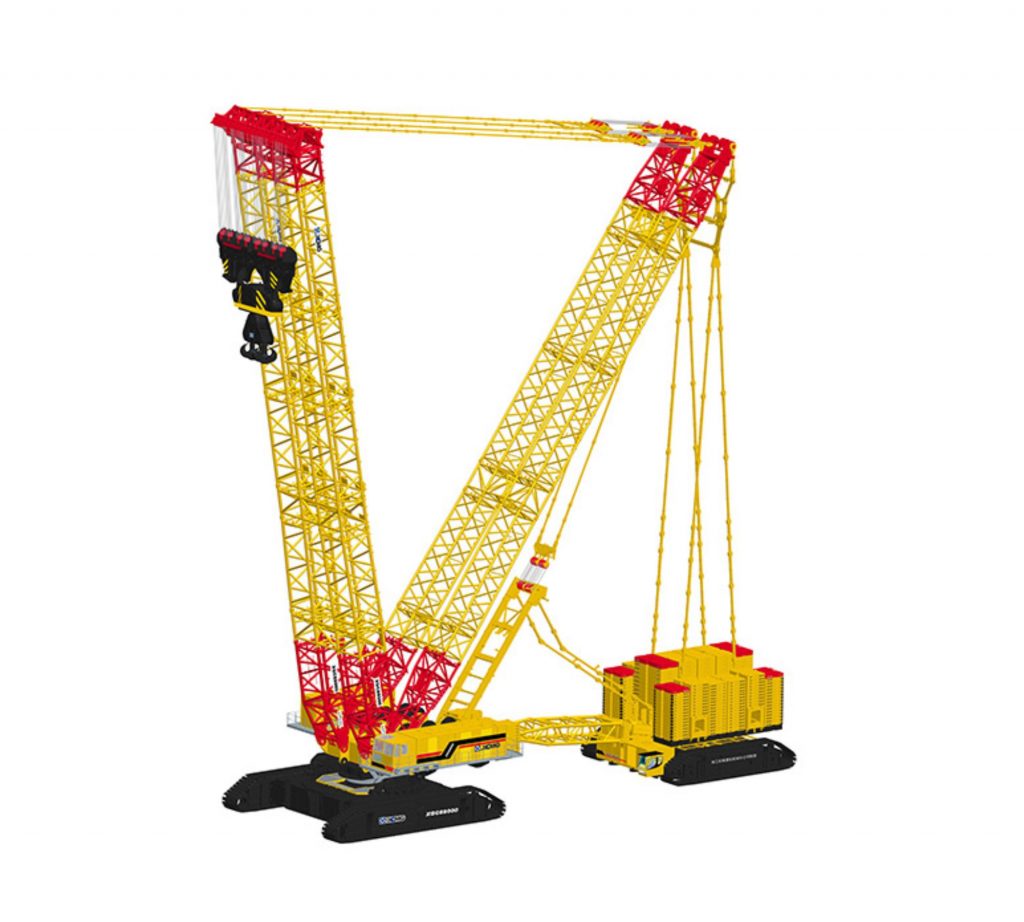
Crawler cranes are mounted on tracks instead of wheels. They are widely used for foundation construction, bridge projects, infrastructure work, industrial lifting, heavy equipment assembly, and large job sites where stability is critical.
Because crawlers distribute load through tracked undercarriages, they can work well on prepared construction platforms and can often move carefully with a load when the lift plan allows it. They are also common support machines for foundation projects involving piling rigs, casing, reinforcement cages, and heavy tooling.
Vernep supports customers looking for crawler cranes, lattice boom cranes, telescopic crawler cranes, and used crane equipment depending on availability.
Tower Cranes
Tower cranes are the familiar cranes used on high-rise and dense urban projects. They provide height and reach from a fixed position, allowing crews to lift steel, concrete elements, formwork, equipment, and materials across a vertical construction site.
A tower crane is usually chosen when repeated lifting over a defined area is more important than moving the crane around the site. Planning must account for base design, tie-ins, climbing sequence, oversailing restrictions, erection, dismantling, and coordination with nearby structures or public areas.
Rough Terrain and All Terrain Cranes
Rough terrain cranes are compact mobile cranes designed for job-site maneuverability. They are common on industrial sites, yards, infrastructure projects, energy projects, and off-road construction areas where a crane must work on uneven prepared surfaces.
All terrain cranes are built to combine road travel with stronger job-site capability. They are useful when a project needs a crane that can travel between sites and still handle demanding lifting work once it arrives.
Truck-Mounted Cranes
Truck-mounted cranes combine transport and lifting in one vehicle. They are practical for material delivery, utility work, equipment placement, smaller construction lifts, and jobs where mobility matters more than maximum lifting capacity.
They are not a replacement for heavy crawler cranes or tower cranes. Their advantage is speed and convenience for the right load, route, and site setup.
Telescopic vs Lattice Boom Cranes
Construction cranes can also be grouped by boom design. A telescopic boom extends and retracts in sections, which helps with faster setup and variable reach. A lattice boom uses a truss-like boom structure that can be configured for heavy lifting and longer reach, especially on crawler cranes.
Neither boom type is automatically better. Telescopic cranes are often preferred for speed and flexibility. Lattice boom cranes are often selected for heavier lifts, larger configurations, and projects where setup time is justified by the lifting requirement.
How to Choose the Right Construction Crane
Choosing a crane starts with the lift, not the machine. Before buying, renting, or requesting availability, prepare the information a crane specialist will need:
- Maximum load weight, including rigging and lifting accessories.
- Required lift radius, height, boom length, and pick/place locations.
- Ground conditions, bearing capacity, outrigger setup, and working platform requirements.
- Site access, transport route, assembly area, and overhead restrictions.
- Project duration and how often the crane must move.
- Required crane type, or whether the crane type is still open for recommendation.
- Operator, inspection, maintenance, spare parts, and service support requirements.
For short-term projects, crane rental may be more practical than ownership. For repeated lifting work, buying a crane can make sense when utilization, operators, maintenance planning, transport, and parts support are already in place.
Frequently Asked Questions
What are the main types of construction cranes?
The main types of construction cranes include mobile cranes, crawler cranes, tower cranes, rough terrain cranes, all terrain cranes, truck-mounted cranes, telescopic cranes, and lattice boom cranes.
What type of crane is best for heavy lifting?
Crawler cranes and large lattice boom cranes are often used for heavy lifting because they offer strong lifting capacity and stability. The best crane still depends on radius, load weight, ground conditions, and site access.
What is the difference between a mobile crane and a crawler crane?
A mobile crane is designed for road travel or fast repositioning, while a crawler crane moves on tracks and is usually chosen for stability, heavy lifts, and challenging job-site ground conditions.
When should you use a tower crane?
Tower cranes are commonly used for tall buildings and urban construction where height, reach, and repeated vertical lifting are required over a fixed work area.
Can Vernep help source crawler cranes?
Yes. Vernep can help customers review crawler cranes, lattice boom cranes, telescopic crawler cranes, used crane options, rentals, spare parts, and service support depending on availability and project requirements.
References and Further Reading
Need Help Choosing a Construction Crane?
Vernep can help you compare crawler cranes, lattice boom cranes, telescopic crawler cranes, used crane options, rentals, spare parts, and service support based on your project requirements.